

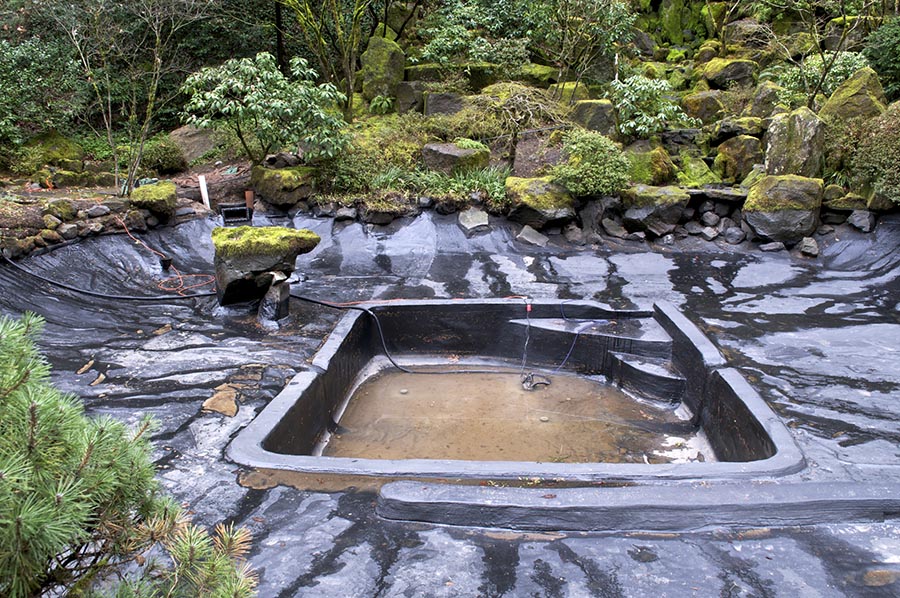
Depth and Volume: Your Pond’s Primary Defense
Of all the decisions you’ll make when building a pond, depth is the single most important factor for winter survival. In cold climates, a deeper pond is a safer pond, period. It creates a stable pocket where fish can endure the harshest conditions winter throws at them.
The Rule of Depth: Creating a Zone of Safety
Deep ponds are necessary to create a sufficient volume of water at the bottom that will not freeze. This deep zone, the hypolimnion, is where your fish will shelter throughout the winter. A key consideration here is the frost line—the maximum depth at which the ground freezes in your region. Your pond’s safe zone must be well below this line.
Pro Tip: The key point here is understanding that frost lines are based on the maximum depth to which the ground freezes, over time. You may have never seen the ground freeze to 2 feet in your area, but it’s possible, so plan for the worst. Consult local building codes or contact your local building department for the most accurate data on frost lines in your area - they’re generally more detailed than the larger NWS maps.
- For moderate climates, where the frost line is only a few inches deep, a minimum depth of 24 inches is the absolute baseline for hardy fish like goldfish or koi.
- For harsh climates, where winters are long and severe, a depth of 36 to 48 inches—or even deeper—is a much safer target.
Greater depths provide a larger, more reliable buffer of 39°F water, protecting your fish not only from freezing, but from stress caused by rapid temperature fluctuations during unpredictable cold snaps.
The Power of Volume: Your Pond’s Life Support System
While depth creates a safe space, volume is what makes that space livable through the entire winter. A larger volume of water is more stable, so it’s able to provide a bigger buffer against the life-threatening problems we covered in Chapter 1. Think of it as your pond’s complete life support system.
A Bigger Oxygen Reservoir
The volume of your pond determines its total oxygen storage capacity. After the fall turnover charges the water with oxygen, a high-volume pond holds a much larger total supply, allowing it to support your fish until spring. A shallow pond is like a small pantry—it can run out of resources long before the winter is over.
Dilution of Toxins
In chapter 1, we saw how toxins are trapped in a frozen pond. A larger volume of water dilutes these toxins more effectively, so they don’t reach lethal concentrations. In a low-volume pond, these same toxins can build up to dangerous levels very quickly.
Thermal Stability
A large body of water has more thermal mass, meaning it resists changes in temperature. A shallow, low-volume pond can be dangerously chilled by a polar vortex, but a deep, high-volume pond will easily maintain its stable 39°F temperature at the bottom.
These principles illustrate why your stocking plan has a direct impact on your pond’s design. A few small fish have a low bioload, but if you plan to keep large fish or a denser population, you should design for greater depth and volume from the outset.
Surface Area, Shape and Siting
Your pond’s surface profile directly affects its response to winter conditions. Design elements like surface area, shape, and siting reduce heat loss and help minimize water quality issues.
Surface Area: When Less is More
This may seem counterintuitive, but for winter survival, a smaller surface area relative to the pond’s total volume is often better. The surface is where your pond loses the most heat to the cold winter air. A wide, expansive pond has a huge area for heat to escape, while a deeper pond with a smaller “footprint” will better conserve its stored warmth before the ice sets in. Think of it like a thermos (small opening, high volume) versus a wide baking dish; the thermos keeps its contents hot for much longer.
Shape: Simple and Safe
Simple shapes aren’t just cheaper to build and easier to maintain; they’re better for overwintering.
- Avoid complex shapes with narrow, shallow “fingers” and bays. These areas can freeze solid to the bottom and may trap fish away from the safety of the deep central basin.
- Opt for simple, organic curves, such as a kidney or oval. These shapes promote gentle water circulation and eliminate dead spots where toxic gases could accumulate.
- Consider steeper sides. While you still want a shallow plant ledge near the edge, a quick drop-off into the deeper basin maximizes the volume of the safe zone.
Siting: Work with Mother Nature
Where you place your pond is just as important as how you build it. A well-sited pond capitalizes on natural conditions to create a more favorable winter environment.
Sunlight
Position your pond to receive maximum winter sunlight. Even weak winter sun provides radiant energy that can warm the water, delaying icing over, melting snow cover, and promoting photosynthesis. It can also help keep a small area of ice open for gas exchange.
Wind
Shelter your pond from prevailing winter winds. A windbreak—such as a dense hedge, a fence, or the side of your house—can dramatically reduce heat loss from the surface before it freezes over.
Trees
Resist the temptation to build your pond directly under deciduous trees. The massive leaf drop in autumn creates a deep layer of organic debris at the bottom of your pond. As these leaves decompose all winter, they consume vast amounts of oxygen and release harmful gases, creating the exact toxic conditions you’re working hard to avoid.
In-Ground vs. Above-Ground
So, should your new pond be built into the ground or be a raised feature? When it comes to surviving a cold winter, the choice is clear—one option has a massive, built-in (or should we say dug-in?) advantage over the other.
The In-Ground Advantage: Free Insulation
Particularly in cold climates, an in-ground pond gets a huge helping hand from Mother Nature. The surrounding earth acts as a perfect, free insulator. Well below the frost line, the ground maintains a stable temperature that protects your pond from bitter wind chills and sudden polar vortexes. This “geothermal” effect is why in-ground ponds are the standard, go-to choice for cold climates. While you still need to be careful about surface runoff, the thermal stability you gain is invaluable.
The Above-Ground Challenge: Fighting the Cold
An above-ground pond is a different beast entirely—it has to fight the cold on all sides. Because its walls are completely exposed to the air, it loses heat incredibly fast. An uninsulated above-ground pond in a cold climate is almost guaranteed to freeze solid - not a good look for your fish!
There’s no avoiding it: to make an above-ground pond work, you must insulate it heavily. This usually means building an outer wall and filling the gap with rigid foam board or another material, which adds significant cost and effort to your build. You do get the benefit of being safe from ground-level runoff, but you’re trading it for a much bigger construction and insulation challenge.
The bottom line? For a winter-ready pond, building in-ground gives you a powerful head start. It’s safer, more forgiving, and works with nature instead of fighting against it.

