

The Comfort Zone (Pizza Level)
Assuming you’re like most insect farmers, you have an established routine. Every Saturday, you drive to Tractor Supply, grab a 25lb bag of layer pellets for $15, and drive home. It’s an easy expense to swallow—basically the price of a large pizza.
But let’s look at the math of the commercial facility we just designed in Chapter 2. We aren’t feeding 50 bins anymore—we’re feeding 2000.
The Multiplier Effect (Mortgage Level)
If 50 bins consume 25 lbs a week, then 2000 bins will consume 1,000 lbs (half a ton!) of feed. Buying at retail, the 50lb bags are a deal at $22 a pop. But when you’re buying 20 at a time, that’s $440. Every single week. That’s nearly $23,000 a year just for dry chow. To put it in perspective, you’ve moved from funding a weekly pizza night to paying a mortgage.
The Retail Trap
This is exactly where the math of scaling breaks down. It’s not “fancy” feed that’s killing you; it’s retail—you’re paying for the bag, the marketing, and the store’s overhead. To put it bluntly: in the insect business, if you’re buying retail, you have a negative margin. You can’t sell a cricket for a profit if you’re paying for the convenience of a branded 50lb sack.
To survive at this scale (in the dreaded “valley”), you have to take on a new mantle. Yesterday, you were buying bags of feed. Today, you’re sourcing calories.
To find our way out of the retail valley, we’ll start by considering how to secure tons of grain for pennies on the dollar, how to automate hydration, and the one metric that rules them all: the Feed Conversion Ratio (FCR).
The Waste Stream Advantage
To get your feed cost down, you need to dig into the caloric waste of other (nearby) industries. You’re looking for high-volume, consistent by-products that are expensive for the producer to dispose of, but nutritious for your insects.
If a local mill or brewery has to pay landfill fees to dump their waste, that waste is an expense. When you offer to take it off their hands, you become a money-saving solution.
The Gold Standard: Wheat Middlings (Mill Run)
If you have a flour mill within 100 miles of you, you’re in luck. When wheat is milled into white flour, the outer shell (bran) and the germ are separated. This mix may be called “Mill Run” or “Middlings,” depending on what part of the country you’re in.
Wheat middlings are high in protein and fiber, perfect for crickets and mealworms, and while retail bran costs $0.60/lb, bulk mill run can often be bought for $0.10–$0.15/lb if you pick it up at the mill.
The Wet Option: Spent Brewer’s Grain
Every brewery produces tons of wet, spent barley every week. Most give it away to cattle farmers, and any good feed you can get for free is a win. But free does not equal optional! Show up reliably and on time, or your free feed will go to someone else!
On the other hand, it’s wet (80% moisture). You have to use it immediately (within 24 hours), or it’ll mold. It also changes your bin management because you are dumping water directly into your bedding.
The Logistics: Welcome to the Gaylord
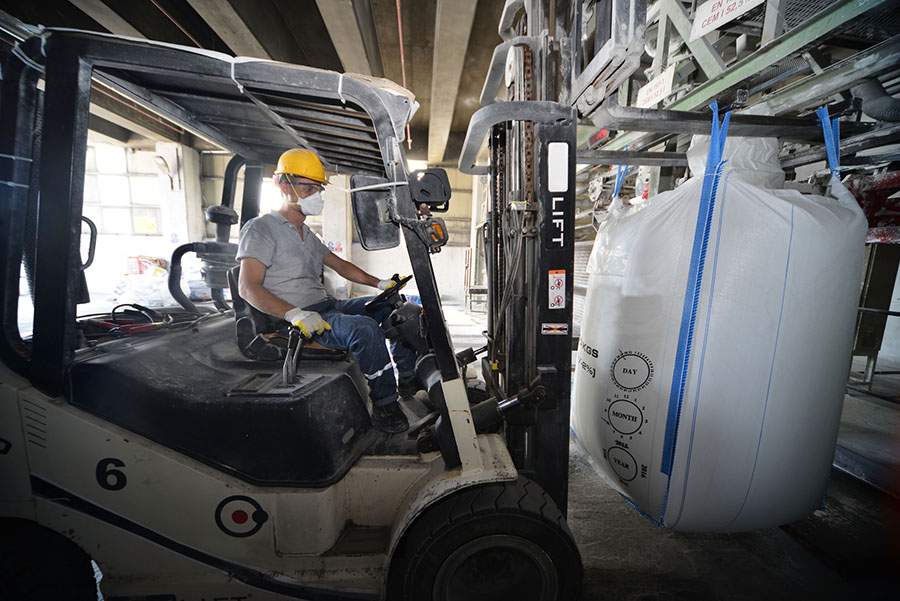
When you leave the retail world, you leave the 50lb bag behind. Bulk feed comes in Super Sacks (totes) or Gaylord Boxes (giant corrugated boxes on a pallet). Don’t kid yourself: you can’t lift these.
You’ll need a pallet jack and a floor capable of holding 2,000 lbs in a 4x4 footprint. The storage area needs to be dry and pest-proof. If a rat gets into a Super Sack of bran, you lose the whole ton.
The Metric That Matters: FCR
Now that you have tons of grain arriving in Gaylord boxes, how can you be sure it’s actually making money? You look at one number: FCR (Feed Conversion Ratio).
FCR is your insect’s “gas mileage.” It measures exactly how many pounds of feed it takes to create one pound of harvestable insect. You can get a lot of information from this simple ratio.
- Cattle FCR: ~8:1 (It takes 8 lbs of feed to make 1 lb of beef)
- Chicken FCR: ~2:1
- Crickets FCR: ~1.7:1 (The target)
Why This Metric Saves Your Business
New farmers often get excited about “free” waste streams—maybe a local bakery offers you tons of stale donuts. But if you feed those donuts and your FCR spikes to 4:1 because the nutrition is poor, you’re losing. You are hauling 4x the material and cleaning 4x the frass for the same amount of product.
The bottom line is that high-quality feed yields a lower (better) FCR. Sometimes, paying $0.15/lb for wheat middlings is more profitable than free spent grain because the bugs grow faster and eat less.
Tracking It
Don’t worry—you don’t need a lab, just a clipboard. Every time you open a new Super Sack, log the date. When that sack is empty, total up the pounds of insects you harvested during that period. That’s all the data you need to calculate your FCR.
Total Feed Used / Total Insects Harvested = FCR
If that number starts creeping up, your feed quality is dropping, or your climate control (Chapter 2) is failing.
Hydration: Ditching the Spray Bottle
In a 50-bin hobby setup, misting your colony might have been a calming morning ritual, a quiet way to get the day started. At 2,000 bins, though, it’s more like a repetitive stress injury waiting to happen.
Manual watering is the single biggest labor sink in a scaling farm. It’s tedious, back-breaking, and high-risk—after all, if you get sick and miss even a single day, you’ll lose the colony. At this scale, you need to automate. You have two ways to do it, and neither of them involves a spray bottle.
Option 1: The Wet Feed Strategy
If you’re using fresh vegetable waste (like pulp from a juicery) or spent brewer’s grain, you might not need a water source at all since your insects can get 100% of their moisture from their food.
- The Pro: Zero plumbing required. No leaks, no pipes.
- The Con: You must be absolutely consistent with your feeding schedule. Unlike a water tank that lasts for days, wet feed dries out fast. One missed feeding, and the grain turns to dry crust, the crickets get thirsty, and the cannibalism begins (Yikes!).
Option 2: The Automated Gravity System (Chicken Waterers)
For cricket farmers using dry feed, a source of liquid water is essential. The standard solution is a low-pressure gravity-fed system:
- Install a central header tank elevated above your highest rack—gravity does the work.
- Run 1/4” tubing along your racks, and connect it to small watering founts (modified chicken nipple drinkers or wicking pads) in each bin.
Voila! Fill one central tank, and 2,000 bins get watered instantly. But keep an eye on the equipment: if a line pops in the middle of the night, you’ll flood your bottom rows and drown your stock.
The Golden Rule of Hydration
In the end, whether you use wet feed or tubes, the rule is the same: Never let the frass get wet. Wet frass produces ammonia. Ammonia kills insects (and smells terrible). Your hydration system must keep the bugs hydrated while keeping the bedding bone-dry.

