

Introduction
In winemaking, sludge accumulation in wastewater ponds is an inevitable consequence of the treatment and fermentation processes. As organic matter, dead yeast cells, and other byproducts settle, they form a layer of sludge that, if not properly managed, can significantly hinder the effectiveness of wastewater treatment systems. Efficient management of this sludge is crucial for maintaining the operational efficiency of the ponds and preventing potential contamination that can result from sludge over-accumulation. Strict regulatory standards also require specific handling and disposal of sludge to protect the environment. This article examines the importance of sludge management in winery wastewater ponds and addresses strategies and practices for handling sludge in a way that upholds compliance and maintains the treatment system’s functionality.
Understanding Sludge Accumulation
In winery wastewater, sludge is a semi-solid byproduct of various substances that settle out of the wastewater. This byproduct includes organic matter such as residual grape solids, yeast, and bacterial biomass from the fermentation process, as well as inorganic solids like sand and clay particles. Both living and dead microbes involved in the treatment process also contribute to the sludge mass.
Several factors influence sludge accumulation in winery wastewater ponds. During crushing and pressing, the winemaking process generates high volumes of organic matter that increase sludge levels as it decays. Treatment processes, especially biological phases like aerobic and anaerobic digestion, contribute to sludge buildup as microbial populations expand and die off. Seasonal variations also play a role; for instance, the harvest season typically triggers a peak in sludge volume due to increased production activity. Understanding these factors is necessary for effective sludge management, as they directly affect the rate of sludge production and the required frequency and removal methods.
Impact of Sludge on Wastewater Ponds
Excessive sludge accumulation in wastewater ponds negatively affects the entire treatment process. As sludge volumes increase, the pond’s working capacity decreases, limiting the amount of new wastewater that can be treated and potentially leading to overflows during periods of high inflow. This reduction in capacity can also hinder treatment efficiency, as the intended retention time for wastewater in the pond is reduced, and it doesn’t allow sufficient time for pollutants to be sufficiently broken down.
Excess sludge can lead to contamination, as settled solids resuspend and release captured pollutants into the pond water. This remixing may cause the treated water to fail discharge standards.
Odor issues are another common problem associated with sludge buildup; as organic materials decompose anaerobically within the sludge layer, they release unpleasant and noxious gasses.
Monitoring sludge accumulation is crucial to preventing such negative impacts and removing it before problems appear. With proactive sludge management, operators can avoid interference with the pond’s treatment processes and capacity, minimize the risk of water contamination, and control odor emissions, all of which are essential for operational, environmental, and community well-being.
Sludge Removal Techniques
Mechanical Removal
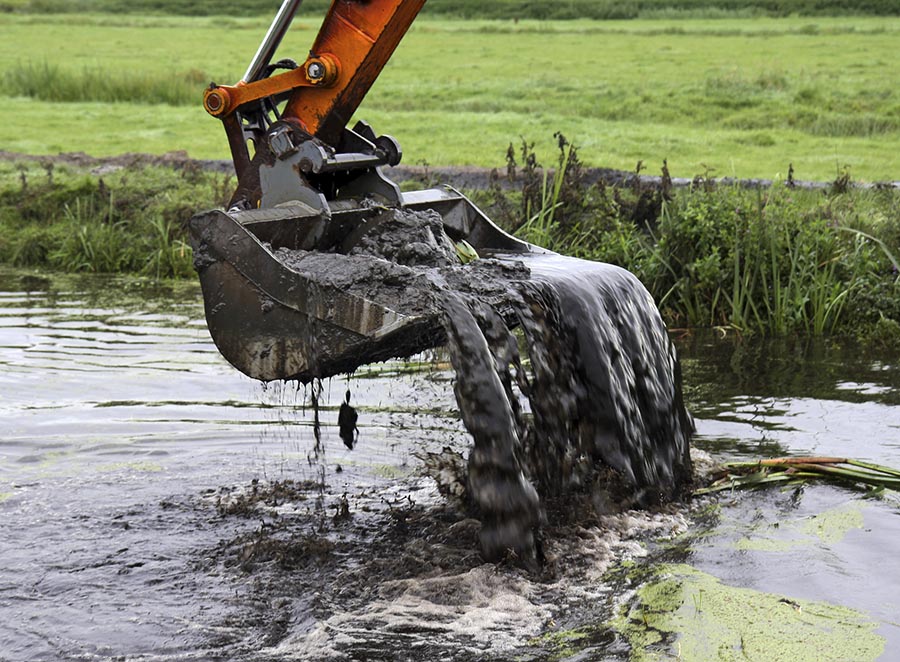
Mechanical sludge removal involves equipment such as dredges or vacuums used to physically extract the sludge. This method is direct and effective and allows sludge accumulations to be directly targeted for removal. It can be highly efficient in ponds where sludge has settled into a thick, consolidated layer. However, mechanical removal can be costly, often requiring specialized equipment, and can disrupt the pond’s ecosystem during the removal process.
Hydraulic Removal
Hydraulic removal employs water currents or pumps to resuspend and mobilize sludge, directing it toward a removal point. This method can be less intrusive than mechanical removal and is often used with sedimentation processes to continuously remove sludge. While hydraulic removal can be effective for ponds with a consistent sludge composition, it may be less suitable for sludge with high solid content or for ponds that require selective sludge removal.
Biological Augmentation
In biological augmentation, specific microbial populations are introduced in the wastewater pond to increase the natural breakdown of organic sludge components and reduce sludge volume over time. Biological augmentation is a natural and potentially cost-effective method, but environmental conditions can influence its effectiveness. Compared to mechanical or hydraulic methods, it often takes longer to achieve significant sludge reduction.
Each sludge removal technique comes with considerations of cost, efficiency, and environmental impact. Ultimately, wineries must choose a method that aligns with their operational requirements and sustainability goals, considering the nature of their wastewater, pond design, and regulatory obligations.
Geotextile Liners in Sludge Management
Geotextile liners are an integral component of sludge management in winery wastewater ponds. The best liners for sludge-heavy environments are durable enough to withstand the wear and tear of regular sludge removal, whether mechanical, hydraulic, or manual. Robust chemical resistance ensures the liner material can resist degradation from the various organic and inorganic compounds present in the sludge.
A liner’s physical strength is essential for withstanding the stresses from sludge removal equipment. The right geotextile liner resists tearing and puncturing, maintaining integrity even during aggressive mechanical removal processes. By choosing high-quality liners with these characteristics, operators can minimize the risk of costly damage during sludge removal operations and extend the service life of the pond lining system.
Best Practices for Sludge Management
Developing an effective sludge management plan is essential for wineries to maintain the efficiency of their wastewater treatment systems and comply with environmental regulations. Such a plan should encompass regular monitoring of sludge levels, accurate assessment of sludge volume, and a predefined schedule for sludge removal.
Regular monitoring includes consistent checks of sludge thickness and distribution within the pond and taking steps to remove it before excessive accumulation occurs. An accurate sludge volume assessment helps plan the necessary scale and manner of removal operations.
Pond design and maintenance also play a central role in minimizing sludge buildup. Optimizing the pond’s shape to promote efficient water flow and settling can significantly reduce the sludge accumulation rate. Effective aeration systems help break down organic matter more rapidly, which reduces sludge formation.
Additionally, careful placement of inlet and outlet pipes can prevent dead zones where sludge can accumulate and facilitate even wastewater distribution within the pond. Even distribution aids in uniform treatment and minimizes sludge buildup.
Conclusion
Effective sludge management is fundamental to maintaining efficient and compliant winery wastewater treatment operations. By implementing strategic pond design, regular monitoring, and timely sludge removal, wineries can avoid the adverse effects of sludge accumulation, including reduced treatment capacity and potential environmental contamination.

