

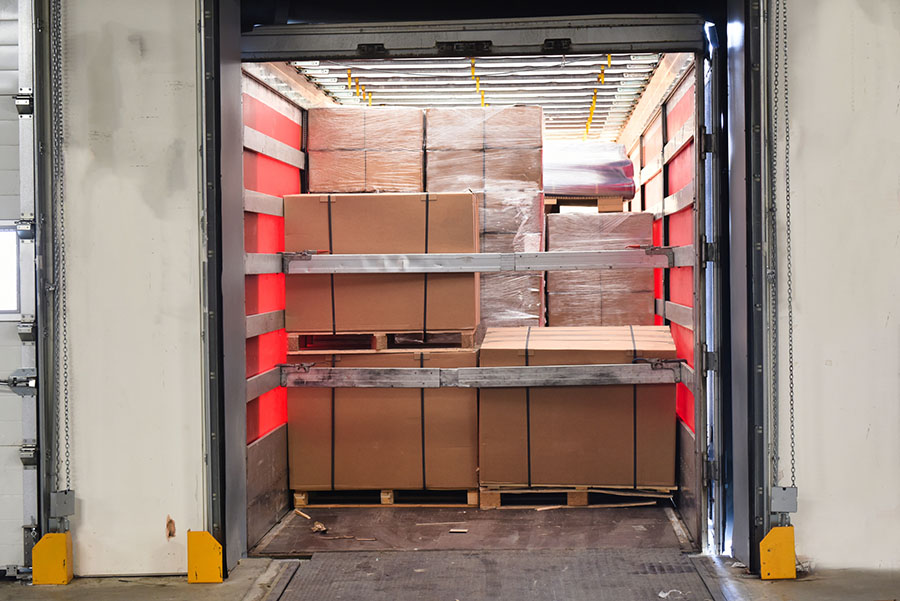
This is where the real shift from hobbyist to commercial CEO begins—you’re moving from selling cups of bugs to selling pallets. By this point, you’re (hopefully) producing more insects than you can possibly sell to your local pet store or the Chicken Lady down the street. Exciting, no? Well, hold on for a second. Think about it: this is the most dangerous moment for a scaling farm. You have high overhead (rent, labor, electricity) and a highly perishable inventory. If you can’t move 500 lbs of crickets next Tuesday, you lose the product and the profit.
This new reality signals it’s time to enter the world of Business-to-Business (B2B) sales. You’re looking for feed manufacturers, zoos, national distributors, and aquaculture farms that will buy in bulk. But things run differently here. They don’t pay cash, they’re not interested in your story, and they’ll bankrupt you if you don’t understand the terms.
Welcome to the big leagues.
The New Goal: Volume vs. Margin
The first thing you’ll notice when you pitch your product to a distributor is the price. Take a deep breath: it will offend you. Yes, your mealworms regularly sell at a cup of 50 for $5.00. Your quality is good, your customers are reliable, and best of all, that’s $100 per pound! But you have to find 1,000 customers, pack 1,000 boxes, and deal with 1,000 complaints.
In the B2B (Business to Business) market, a distributor offers you $4.00 per pound. Your instinct is to say “No way!” You’ll be losing money; there’s no way you can survive at that price point! But let’s consider the actual facts here.
The Real Cost of Sales
In B2C, your cost of sales is high: marketing, packaging, customer service, and shipping individual boxes. In B2B, your margin per bug is lower, but your cost of sales is almost zero. You pack one pallet, ship it to one dock, and send one invoice. That’s a lot less work.
In other words, when you sign a B2B contract, you’re trading margin for predictability. You’re accepting a lower unit price in exchange for the guarantee that every single bug you produce has a home before it even hatches. That kind of predictability is what allows you to pay the bills and stay in business.
Pro Tip: Shifting from Totes to Raceways
When you scale operations to tons per month, you’ll eventually hit a plastic ceiling—managing 5,000 individual plastic totes is a labor nightmare. Commercial farms often switch to custom-built 8-foot or 20-foot wooden “continuous flow” raceways. But you can’t put bugs directly in wood (it rots and holds bacteria). Line your raceways with heavy-duty, food-safe pond liners (RPE or HDPE). A liner turns a cheap lumber frame into a waterproof, industrial-grade bio-reactor that’s easy to clean and lasts for years.
The Pitch: What Buyers Actually Want
When you walk into a local bait shop, you sell your "story." You talk about how you hand-feed the crickets organic carrots. The owner buys from you because they like you.
When you pitch a national distributor or a pet food manufacturer, that story is irrelevant. You’re likely speaking to a Purchasing Agent. Their entire job is to minimize risk. They don't care about your carrots; they care about two things: Capacity and Consistency.
The Fill Rate Trap
This is the single most important metric in B2B sales. The Fill Rate is the percentage of orders you ship in full and on time. To get the contract, new farmers are often tempted to over-promise. They commit to 500 lbs a week, but one week they only harvest 400 lbs.
In the hobby market, you can say, “Sorry, our harvest was low.” In the B2B market, you’ll face a chargeback (a fine) or your contract will be cancelled immediately.
The Rule? Never promise your maximum capacity.
Be realistic and only commit to your minimum reliable output. If you can grow 600 lbs on a good week but only 400 lbs on a bad week, your contract capacity is 400 lbs.
The Certificate of Analysis (COA)
Big buyers (especially in aquaculture or pet food) need proof of what is in your bugs. Legally, they can’t put “20% Protein” on their dog treat label unless you provide a Certificate of Analysis (COA) verifying that number. They’re looking for reports from an accredited third-party testing facility (Midwest Laboratories, Eurofins, or New Jersey Feed Lab, for example) showing protein, fat, moisture, and microbial counts (Salmonella/E. coli).
You’ll need two types of tests:
- Proximate Analysis: This breaks down the nutritional value (Protein, Fat, Fiber, Moisture, Ash).
- Microbial Screen: This tests for pathogens (Salmonella, E. coli, Listeria, Yeast/Mold).
This is commercial-level testing, so expect to pay roughly $150–$300 per sample, depending on the number of pathogens you test for. It takes about 5-7 business days to get the results via email.
Consistency must be absolute. If you change your feed formula (e.g., switch from wheat bran to corn meal), your old COA is invalidated, and you’ll need a new test.
Why consistent testing is critical
The stakes here are much bigger than you might imagine: Pet food labels are legally required to list a Guaranteed Analysis (e.g., “Minimum Crude Protein: 25%”). This isn’t a marketing estimate; it’s a legal promise. If a state agriculture inspector conducts a random test and the bag of pet food tests short, the manufacturer faces a mandatory recall. They have to pull every bag from every store shelf in the country. They’ll sue you for the damages, and your business is finished.
Pro Tip: don't wait for them to ask. Have a recent COA ready in your pitch deck. It signals that you are a professional operation, not a garage hobbyist.
The Cash Flow Trap: Surviving Net-30
In the hobby world, transactions are simple: You hand over the cricket cup, they hand over the cash.
In the B2B world, cash on delivery (COD) is rare indeed. Instead, you will be asked to sign a contract with Net-30 or Net-60 payment terms. Translation: “We’ll pay you 30 days after we receive the invoice.”
So let’s talk about the math of the death spiral. It’s grim if you’re not prepared. Let’s say you land a contract for $4,000 a month. It’s time to celebrate! You happily spend $2,000 on feed and labor to grow the bugs and ship them, as promised, on January 1st. You’ve fulfilled your part of the bargain with aplomb. Give yourself a pat on the back!
But wait. Let’s look a bit closer.
- January 1st: You ship the bugs and deliver your invoice for $4000. So far, you’ve spent $2,000. You have $0 in the bank.
- February 1st: You ship the next batch and deliver another invoice. You’ve spent another $2,000, but you still haven’t been paid for January. You are now $4,000 in the hole, just on feed.
- February 10th: The January check finally arrives in the mail.
The Reality Check: For those first 40 days, you are essentially lending money to a multi-million dollar corporation.
So here’s a rule to live by: Do Not sign a B2B contract unless you have 3 months of operating cash in the bank. If you rely on this week’s sales to buy next week’s feed, Net-30 terms will bankrupt you well before the first check clears.
The good news is that new suppliers often have leverage to ask for Net-15 terms or a 50% deposit on the first three orders. Don’t be afraid to ask—purchasing managers understand that small farms have tight cash flow; sometimes they can bend the rules to help you get started.
Pro Tip: Invoice the Right Person
Never just stick your invoice in the box with the bugs. The warehouse guy will lose it, or use it as a napkin. Always get the email address for Accounts Payable (AP). Email the invoice directly to them as a PDF. That payment clock doesn’t even start ticking until the AP has the invoice in their hands.
The Final Word: Build It to Last
Even more than biology, successfully scaling an insect farm relies on infrastructure. Whether you’re stacking high-density plastic bins or constructing custom 20-foot raceways lined with heavy-duty geomembranes, the principle remains the same: quality control is your only product.
The buyers are out there and the market is hungry. You have the blueprint, the biology, and the business logic. The only thing left to do is build the machine.
Now, go check your humidity. It’s probably low.

