

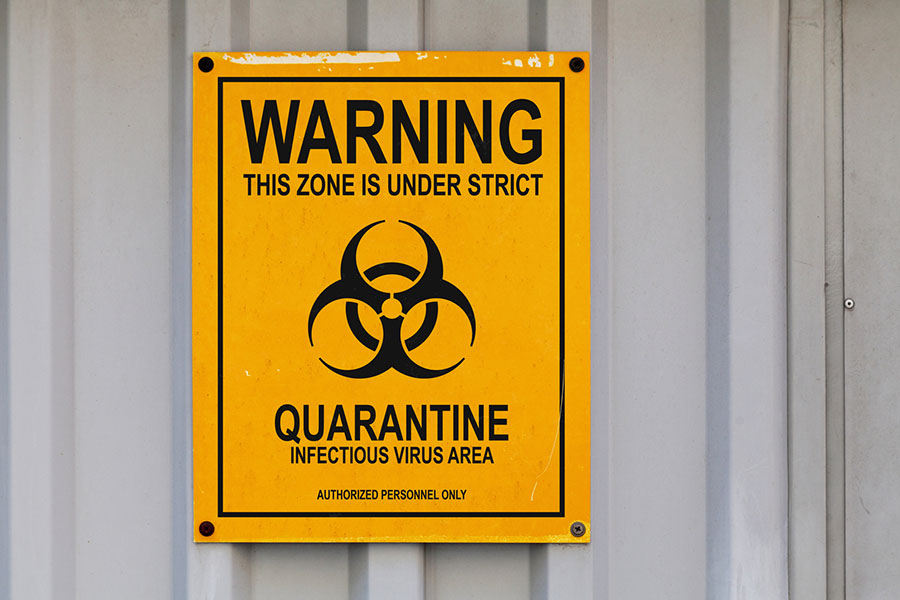
There’s a wise (if unpleasant) saying in this industry: “There are two types of cricket farmers: those who have crashed, and those who are about to.”
The Silence
Let’s start off with some clarity. It may be upsetting, but losing 10% of your stock doesn’t qualify as a crash. No, a crash is walking into your facility on a Tuesday morning and hearing... absolute silence. No chirping. No movement. Just the smell of ammonia and death. Take a peek inside, and 10,000 crickets are lying on their backs, legs twitching. By Friday, every insect in the building is dead.
In nature, when an insect gets sick, it dies alone. But on an insect farm, they live shoulder to shoulder in plastic bins (AKA: the perfect incubator). When density, heat, and humidity are maximized in the interest of maximum productivity, a problem on your production floor doesn’t simply spread—it explodes.
The Usual Suspects
The Cricket Killer
Densovirus (AdDNV) paralyzes crickets. They stop eating, swell up, and die. It is airborne, incredibly contagious, and can linger on dry surfaces for months.
The Mealworm Killer
Grain Mites (Acarus siro) don’t kill the larvae directly; they go about it in a more roundabout fashion: exploding in population, covering your bins in a layer of “living dust,” overheating the colony, and suffocating your stock.
The BSF Meltdown
In an overcrowded BSF bin, excess metabolic heat can’t escape. The substrate overheats, oxygen levels drop, and the beneficial bacteria die off. They’re replaced by anaerobic bacteria, which turn your bin into toxic sludge, and overnight, all the larvae die.
The Vectors
All apocryphal stories aside, viruses and mites don’t actually teleport. No, they hitch a ride just like the rest of us. If you have an outbreak, it is 99% likely that you brought it in.
Shoes (The Prime Suspect)
Your shoes are a veritable biological sponge. Just walking across a parking lot, the soles of your shoes collect wild-bird droppings, dirt, microscopic mites, and the occasional piece of chewing gum. When you walk into your grow room wearing those same shoes, you’re tracking death directly onto your facility floor.
The Fix:
Follow clean room protocols without fail.
Cardboard (The Trojan Horse)
This is the most heartbreaking vector. A pallet of cheap egg flats may be an easy way save money. But no one told you that cardboard was stored in a damp warehouse infested with grain mites. You carry the pallet into your clean room, and within 48 hours, the mites migrate from the cardboard to your feed. You just paid to infect your own farm.
The Fix:
Never bring raw cardboard pallets directly into the clean room. Bake them or freeze them if you can, or play it safe and buy your pallets from certified clean suppliers.
The Wild Cousin
A wild cricket or beetle from your garden isn’t a friend. It’s a carrier. Wild populations often harbor dormant viruses they have adapted to survive, but your captive, high-density colony has no immunity to them. Think Typhoid Mary: if a wild bug gets in, it’s a biological bomb.
The Early Warning System
A crash happens overnight, but the warning signs start days earlier. You need to develop a “sixth sense” for your colony, including the signs of health. If you notice explicit danger signs, lock the room down immediately.
Knowing Your Smellscape
Healthy Smells
- Crickets and mealworms should smell like sweet grain, dry bran, and humid earth.
- BSF should smell like fermentation (sweet/sour), yeast, or warm compost
The Scent of Danger
- For crickets, sharp ammonia (Cat Pee) is your emergency signal. Your airflow is too low, or your frass is too wet. The ammonia gas is burning their lungs.
- For BSF, the scent of rotting meat or vomit is your air raid siren. It signals an Anaerobic Crash. The beneficial bacteria have already died, and the sludge is turning toxic.
- For mealworms, the red-flag odors are musty and moldy. They indicate your substrate is too wet and a mite explosion or fungal outbreak is in the making.
Knowing Your Soundscape
Healthy Sounds
Mealworms and BSF are pretty quiet, but a cricket room should never be silent. The sound of millions of crickets moving creates a constant, white-noise-like hiss, punctuated by the chirping of adults.
Danger Signs (Crickets only)
If the room sounds dampened or significantly quieter than yesterday, don’t ignore it. Lethargy is the first symptom of Densovirus paralysis.
Recognizing Behavior Signals
Healthy Behavior
Insects should be skittish. If you touch a bin, they should scatter.
Danger Signs
- If crickets are sluggish, dragging their back legs (The Twitch) or swelling up, you have a viral outbreak.
- If BSF larvae are trying to crawl out of the bin en masse (The Exodus), the bin is overheating, and they’re fleeing a meltdown.
The Fortress: Clean vs. Dirty
You cannot cure a virus. You cannot fix a mite explosion with chemicals (because insecticides kill your insects, too). The only cure is prevention. Once it’s inside, the battle is usually already lost.
Most biosecurity failures occur when the farmer wears their street shoes into the breeding room. The only way to avoid this is to divide your farm into two strict zones: The Dirty Zone and The Clean Zone.
The Dirty Zone (The Buffer)
This zone includes your office, your loading dock, and your bathroom. You can wear street clothes here. Delivery drivers can enter here. This is where you receive cardboard, feed, and supplies.
This area is assumed to be contaminated.
The Red Line (The Anteroom)
Between the Dirty Zone and the Clean Zone, you need a physical barrier. This doesn’t require expensive construction; it requires a roll of red duct tape and a bench.
The Danish Entry Protocol
- From the dirty zone, enter the anteroom.
- Sit on the bench (which straddles the Red Line).
- Facing the dirty side, take off your street shoes & store them.
- Swing your legs over the Red Line.
- Facing the clean side, pull out your facility shoes & put them on.
The Pocket Dump
Your phone and keys are filthy. Either leave them in the Dirty Zone or wipe them down with alcohol before crossing the line.
Note on Clothing
In a perfect world, you’d change into scrubs, but that’s not always feasible. Instead, designate a lab coat to live on a hook on the clean side. Never wear your barn jacket in the cricket room!
The Clean Zone (The Colony)
This is the sanctuary.
Airflow Defense (Positive Pressure)
You don’t need a NASA-grade clean room, but you should aim for positive air pressure. Install an intake fan on the far wall that pulls fresh, outdoor air through a HEPA filter into the clean room. This slightly pressurizes the space. When you open the door from the anteroom, clean air rushes out toward you, preventing dust and pests from floating in.
Dedicated Tools
The broom in the Breeding Room stays in the Breeding Room. If you use it in the hallway to sweep up a dead cricket, you have just breached your own biosecurity.
The Kill Switch (Protocol X)
If your sixth sense detects a virus or a meltdown in the making, you have a difficult choice to make. Most new farmers try to save the bin. They pick out the dead ones. They lower the humidity. They pray. Sadly, this is exactly how you lose the entire farm.
The moment you confirm a contagious outbreak (virus or mites), execute Protocol X. It’s painful (and expensive), but it’s the only way to stop the hemorrhage.
Step 1: Quarantine
- Stop Movement: Do not open the door. Do not enter.
- Stop Airflow: Turn off the intake fan and HVAC immediately. You don’t want to blow viral spores into the hallway.
- Seal It: Tape the door seals shut from the outside. Mark the door with a “DO NOT ENTER” sign.
Step 2: Cull
Do not bring the insects out of the room to kill them. Walking them through the hallway spreads the pathogen. You must kill them inside the sealed room.
The CO2 Bomb: The industry standard is to pump CO2 into the sealed room (or individual bins via a tube) until oxygen levels drop below 5%. It is fast, painless, and ensures nothing crawls out alive.
Step 3: Sanitize (The Bake-Out)
Once the insects are dead and bagged in double-layered trash bags, make sure nothing is left behind.
- Bacteria/Mites: A deep bleach clean is usually sufficient.
- Densovirus: Bleach won’t cut it—you need heat, and plenty of it. Crank the room’s heater to 140°F (60°C) and hold it there for 4 hours. This bakes the virus out of the cracks in the concrete.
Step 4: The Purge (Scorched Earth)
You just finished the parts that hurt the spirit; this is the part that hurts the wallet:
Throw away everything that touched the colony.
- The List: cardboard, substrate, and insects obviously go. But you must also toss the brooms, dustpans, screens, and filters.
- The Plastics: Can you save the plastic totes? Technically, yes, with industrial sterilization. But is it worth the risk? If you miss one spot of virus on one bin, you’ll restart the cycle.
The Rule: If it’s porous, trash it. If it’s cheap, trash it. When in doubt, buy new.

