

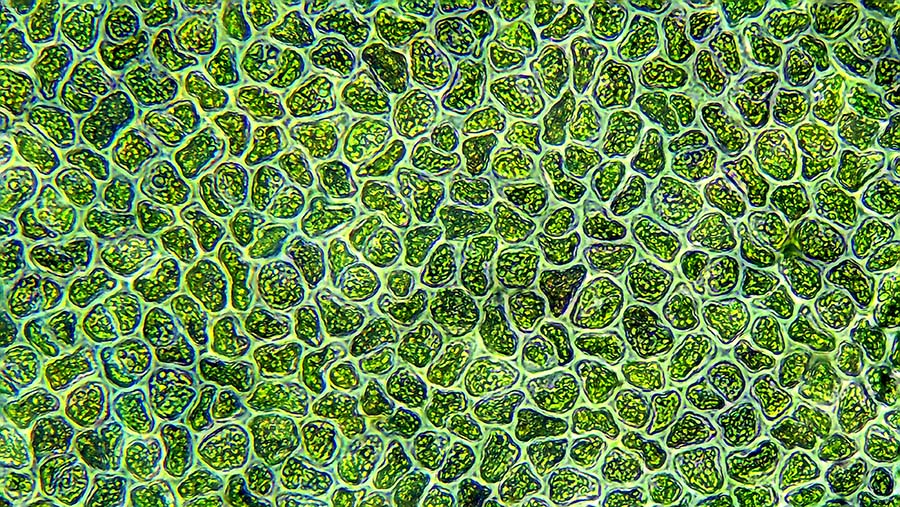
Algae are a large family of unique organisms that have emerged in recent decades as a significant opportunity in modern biotechnology. While they’re not plants, they survive through photosynthesis, and although some live on land, we’re most familiar with them as aquatic organisms. Algae’s unique capacity for rapid growth and their efficient conversion of sunlight and carbon dioxide into biomass has triggered high interest as a high-potential crop and a cornerstone of the burgeoning bioeconomy with a fascinating portfolio of applications. However, algae’s remarkable biology alone won’t ensure it can become a successful commercial product—let’s take a closer look at its vast potential and then some of its biggest challenges.
A Spectrum of Modern Applications
It’s essential to recognize that the commercial landscape for algae encompasses not a single market but a remarkably broad spectrum of opportunities. It ranges from high-value, low-volume specialty products at one end of the scale to high-volume, low-margin commodities at the other.
At the high-value end are nutraceuticals and dietary supplements. Today, this is the most mature and profitable segment of the market. Global wellness trends have gained momentum, driven by an increasing focus on highly personalized, targeted solutions for holistic wellness and longevity. High-purity products like Spirulina, Chlorella, and algae-derived Omega-3s command premium prices that can justify the intensive, controlled processes required for their production.
Further along the spectrum is the animal and aquaculture feed sector. This is a vital market where algae provide an environmentally sustainable and nutritionally dense alternative to traditional ingredients, such as fishmeal and soy. In this segment of the spectrum, the focus is on leveraging the bulk biomass as a source of essential proteins and fatty acids.
At the far end of the spectrum lie biofuels and bioplastics, the ultimate drivers of high-volume production. These “green” applications capitalize on algae’s ability to be cultivated on non-arable land, avoiding competition with traditional food crops. While the economics are challenging, they represent a long-term strategy for producing sustainable fuels and biodegradable materials at a massive scale, an extremely popular concept for a global population concerned about pollution and climate change.
The Two-Speed Algae Economy
This spectrum of applications creates a fundamental economic split in the industry—a “two-speed economy.” Understanding this division is critical for any serious venture.
The first speed—the fast lane—is occupied by the nutraceutical and cosmetics sectors. Here, high-value compounds command premium prices. The high cost of production is a manageable fraction of the final retail price, where healthy profit margins are possible even with current technologies. This is the established, profitable side of the industry.
The second speed—the slow lane—is the world of biofuels and bioplastics. These are commodity markets where products must compete on price with deeply entrenched, low-cost incumbents, such as fossil fuels. The profit potential is enormous but entirely contingent on achieving massive economies of scale and radical cost reductions that have so far remained elusive.
An entrepreneur or investor must consciously decide which lane they are targeting since the capital requirements, risk profile, and path to profitability are fundamentally different for each. In this industry, success isn’t just about growing algae; it’s about choosing the right economic race to run.
An Environmental Powerhouse
Beyond the products they become, algae offer powerful environmental advantages that set them apart from nearly any other form of agriculture. More than secondary benefits, they represent strategic opportunities that can fundamentally alter the economics of a cultivation facility.
The most well-known of these is algae’s appetite for carbon dioxide. As they grow, they consume vast quantities of CO2, effectively locking it away in their biomass. On average, producing one ton of algae fixes about 1.8 tons of CO2. This opens the door to a powerful synergy: co-locating an algae farm next to an industrial producer of CO2, such as a power plant or ethanol facility, transforms a waste product into free fertilizer, significantly boosting algae production.
This same principle applies to water. Municipal (and sometimes industrial) wastewater contains excessive amounts of nitrogen and phosphorus from the organic matter it carries. Fortunately, algae are happy to consume these nutrients as they multiply. A wastewater treatment system integrated with algae ponds can produce clean water, capture valuable agricultural nutrients, and produce valuable biomass, all in a single facility. It’s a remarkable win-win-win situation.
The Professional Imperative: Control is Everything
To make algae production a profitable enterprise, operators must establish a firm mindset: a commercial algae pond is not a natural ecosystem to be delicately managed; it’s an industrial bioreactor that requires careful control for maximum efficiency. Since profitability hinges on control, that’s the focus of this book.
Uncontrolled variables, ranging from water quality to contamination, can produce unpredictable yields and lead to costly crop failures. Ultimately, every major challenge in algae cultivation stems from a problem of control, and the ability to solve these problems is what separates successful ventures from failed ones.
The farm’s physical infrastructure is the foundation of this control. The systems and materials an operator chooses—from the pond design to the liner that contains the water—dictate how precisely the environment can be controlled. In fact, since these initial engineering decisions establish the operational ceiling for the entire business, they’re the most critical choices a professional will make.
Looking Ahead
Now that we’ve established the core opportunities in the algae industry and the central importance of control, it’s time to move from the ‘why’ to the ‘how.’ Since the very first step in building a successful algae farm happens long before a single pond is dug, we’ll tackle the critical strategic decision of site selection in the next chapter.

